A collection of memory vingettes of 1970s migration from Kiev, USSR. Writings, photographs, film stills, archival news footage, along with artifacts, sketches compiled into booklet form. 2025. Best viewed in full screen mode.
Everybody Should Know Where They Come From
To quote a recent New York Times opinion piece, “The human species is on the move.” The 2024 UN World Migration Report revealed that last year there were more people living outside of their birth countries than any other time in modern history.
The necessities of migration reach beyond the specifics of nation and politic. Migration is survival. The story of one, is the story of many. And as consequence, questions of belonging through displacement are inescapable. Following are select pages from the above booklet.
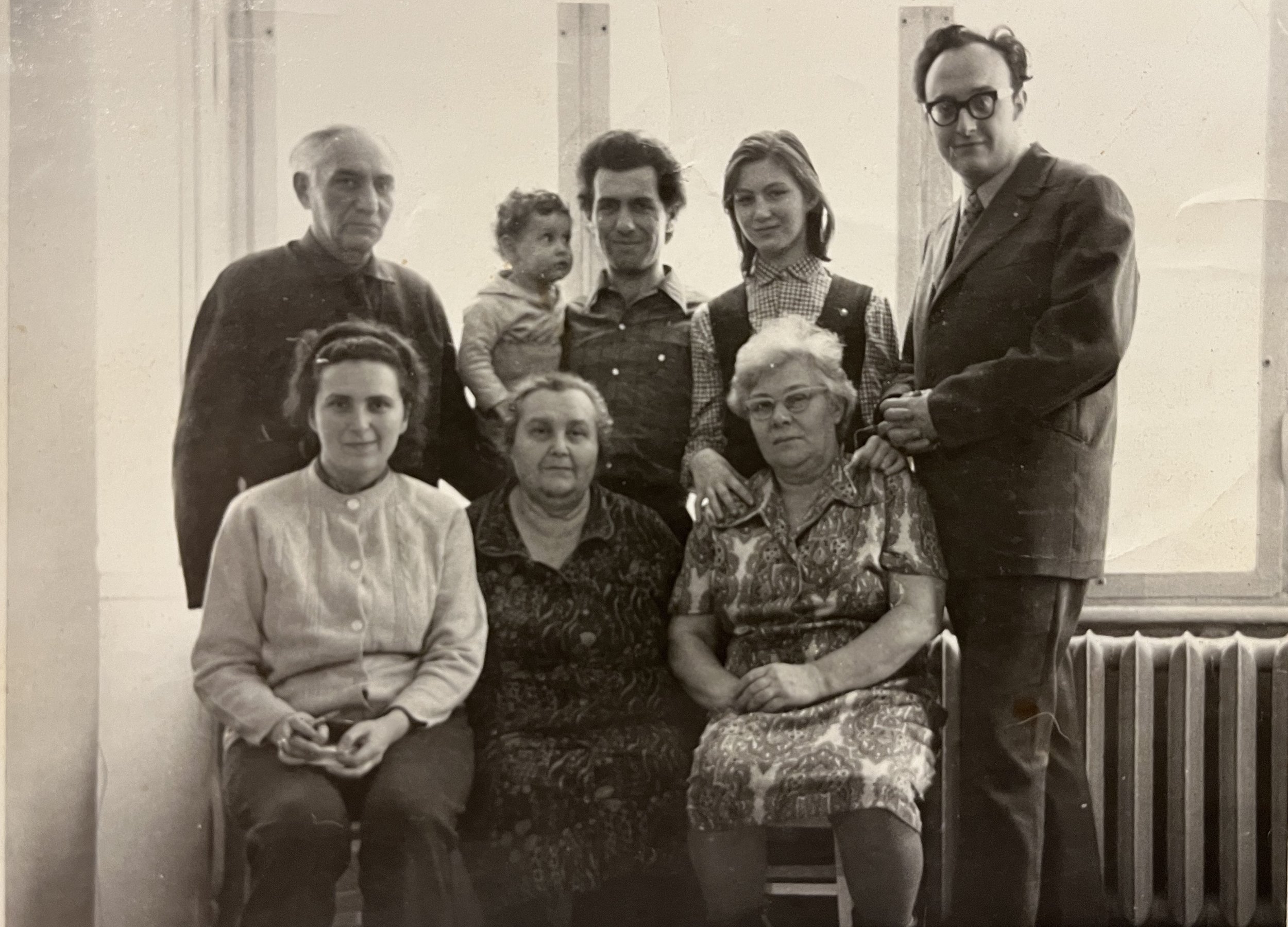
Days before emigration. Last family gathering. Kiev, USSR, 1973
Rezinochki - резиночки - elastic bands
My parents describe it as a buzz in the air. People were talking, exchanging information, sharing letters. Soviet jews were leaving.
My father had carefully writen all our names on a friends’ elastic band who was immigrating to Israel. The elastic band that holds up your underpants. It was how many got their vyzov - visa invitations at the time. A way out from behind the iron curtain.
Valery Kanevsky (33 years old, Ukrainian, electrical engineer, Masters degee from Kiev Polytechnical Institute), Regina Kanevsky (34 years old, Jewish, director in publishing, Masters degree from Ukrainian Polygraphical Institute), Vladimir Kanevsky (child, 6 years old) and Elena Kanevsky (child, 2 years old).
Waiting as this information passes through mysterious hands. Our fictious Israeli relatives send a formal request for family reunification.
We didn’t know that in the United States there were student and grass root led demonstrations in San Francisco and New York singing “Let My People Go” and holding “Free the Soviet Jewry” signs. Hundreds, sometimes thousands of people in support.
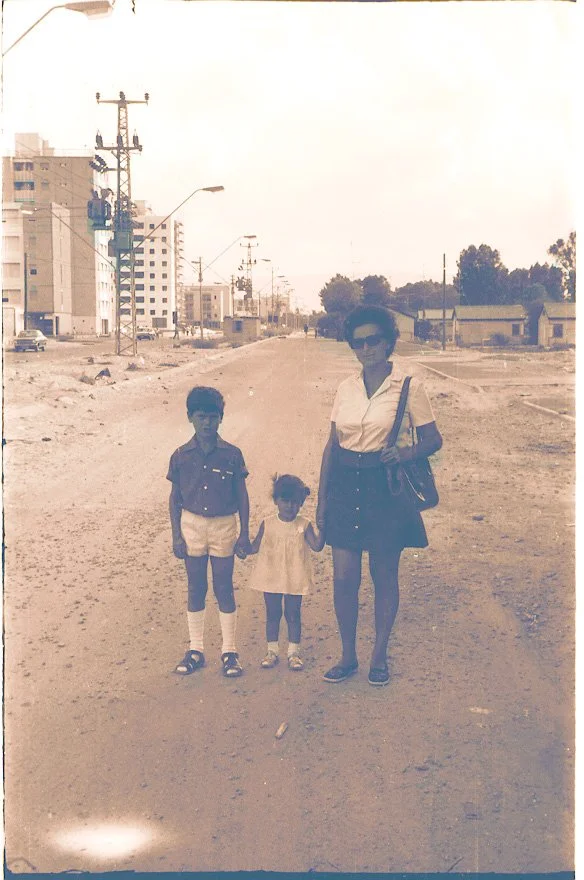
Kirat Motzkin, Israel. 1974
Chains
Kirat Motzkin was still mostly desert. Clusters of housing developments gradually coming up. My father helped build our apartment building we were to live in, socialist kibbutz style. He would sleep in the unfinished apartment during construction. The rest of us were waiting in an “absorbtion center” in Dimona.
Our furniture and books arrived in crates from Kiev to Motzkin. They just left them on the street. My father slept on top of the crates holding a heavy, thick steel chain that he wrapped around his arm. He heard a group approaching him, “five or six Georgians” he says, carrying crowbars. Papa jumped off our crates and started swinging the chain like a helicopter above his head. They left him alone. Called him the crazy Russian.
We later sold or gave away everything that was in those crates - furniture, dishes, kitchen items, books - paid off all resettlement loans and set off on “holiday” to Rome. Two way tickets were bought, though used in only one direction. We left Israel with two suitcases and cash.
In Italy a neighbor convinced my father that having cash was not wise and to instead buy gold. He bought my mother a hefty 14 karat rope chain. There it was, our dwindled life possesions embodied in a singular gold chain.
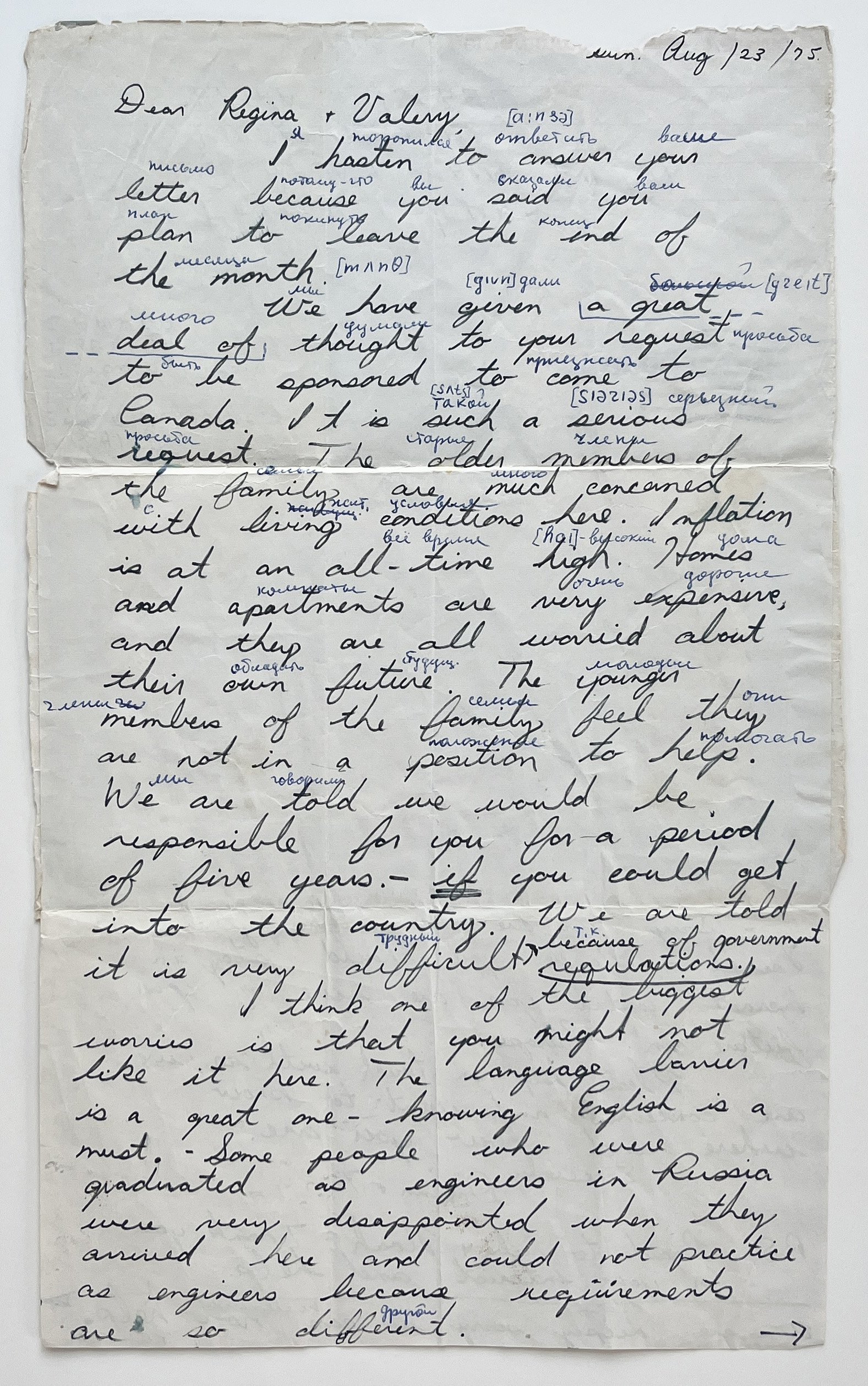
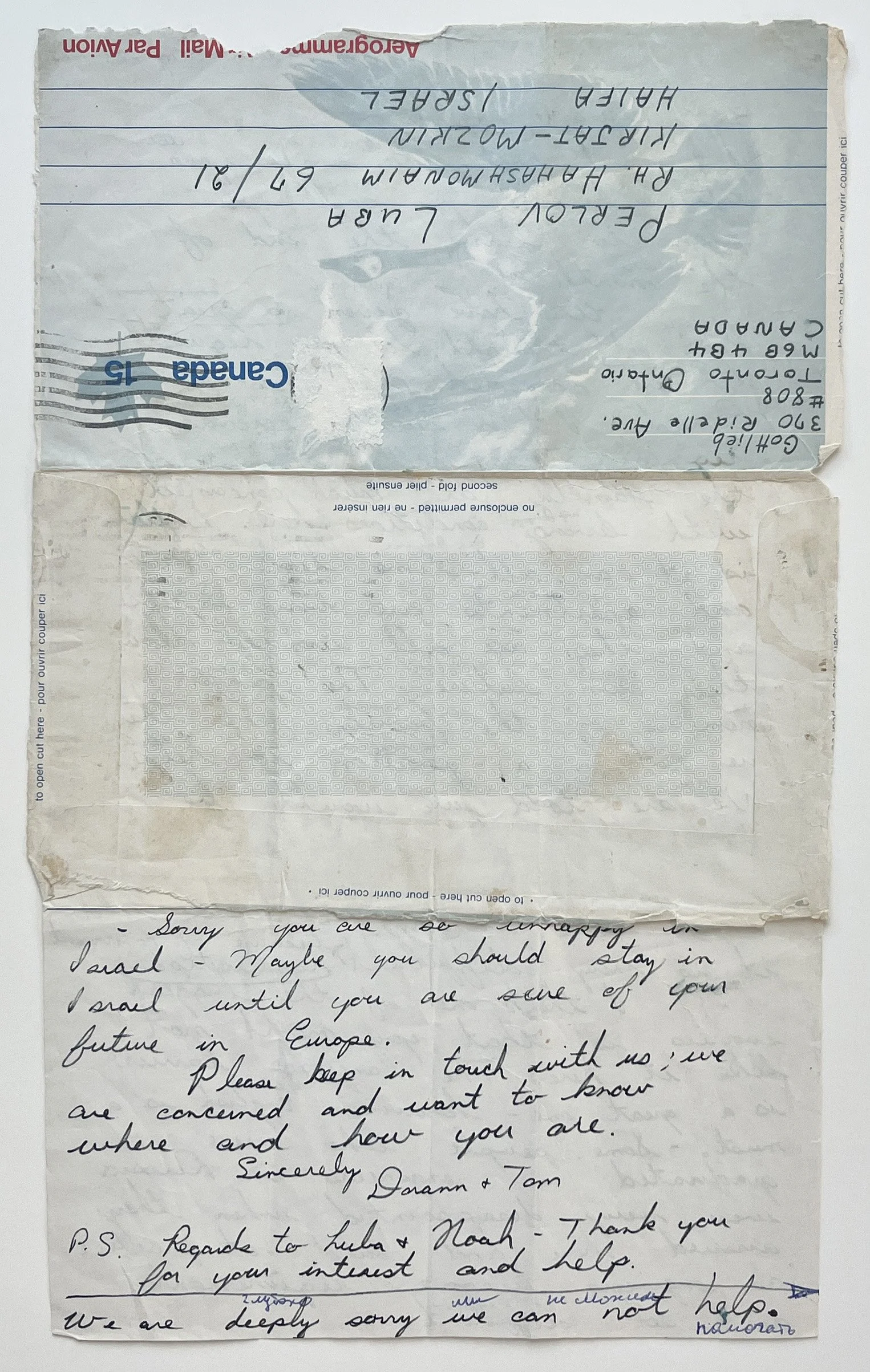
Translation stops at, ‘Not in a position to help’. 1975
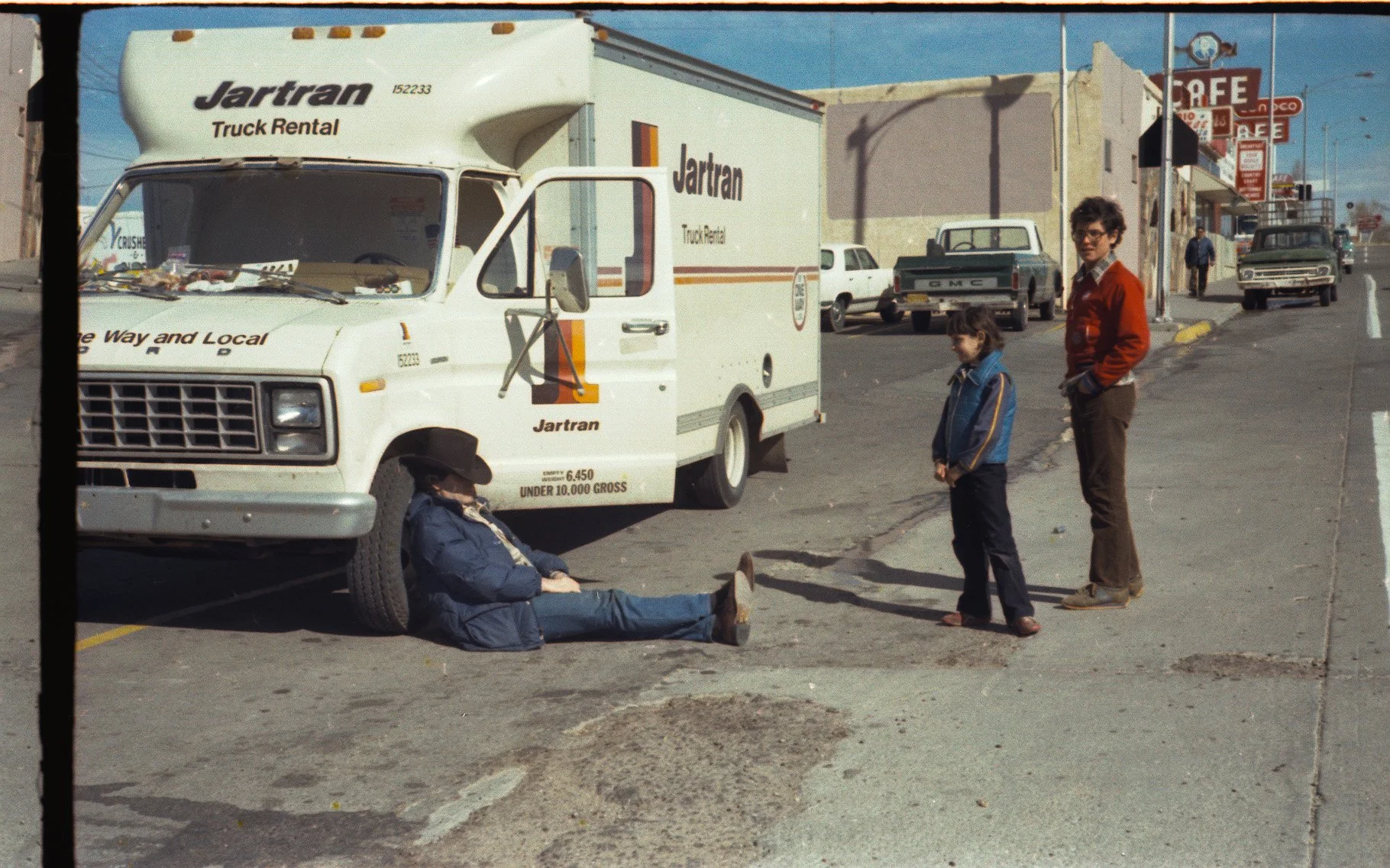
Resting Cowboy, somewhere in the American midwest, 1981
West - 1981
We sang John Denver driving across the country. All four of us sitting in a row of the moving truck. Papa driving.
Take me home, country road,
To the place I belong.
My dad bought a cowboy hat somewhere in the southwest along the way. We took turns wearing it, except mama, she bought herself a Native American tourquise ring. Cowboys and indians.